
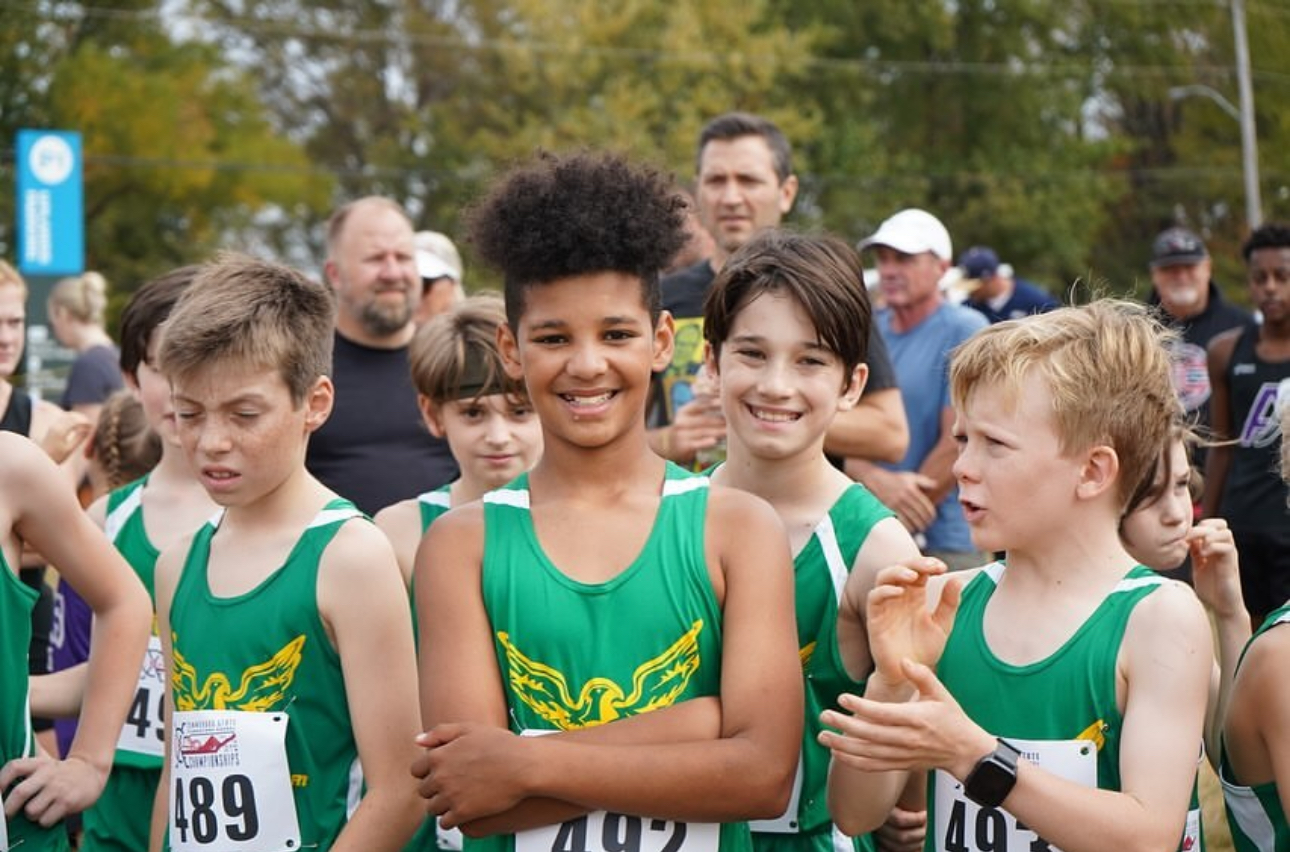
Your middle schooler just announced they want to run track this spring, and you’re wondering what you’ve signed up for. Good news: middle school track is one of the most welcoming introductions to competitive athletics your kid can have. At Memphis Youth Athletics, we run a spring track and field series for middle schoolers, and we want to help you make the most of it.
Here’s your parent guide to the middle school track season, from when it runs and how meets work to which events your kid can try and how to support them from the first practice to the last meet.
What Is Middle School Track and Field?
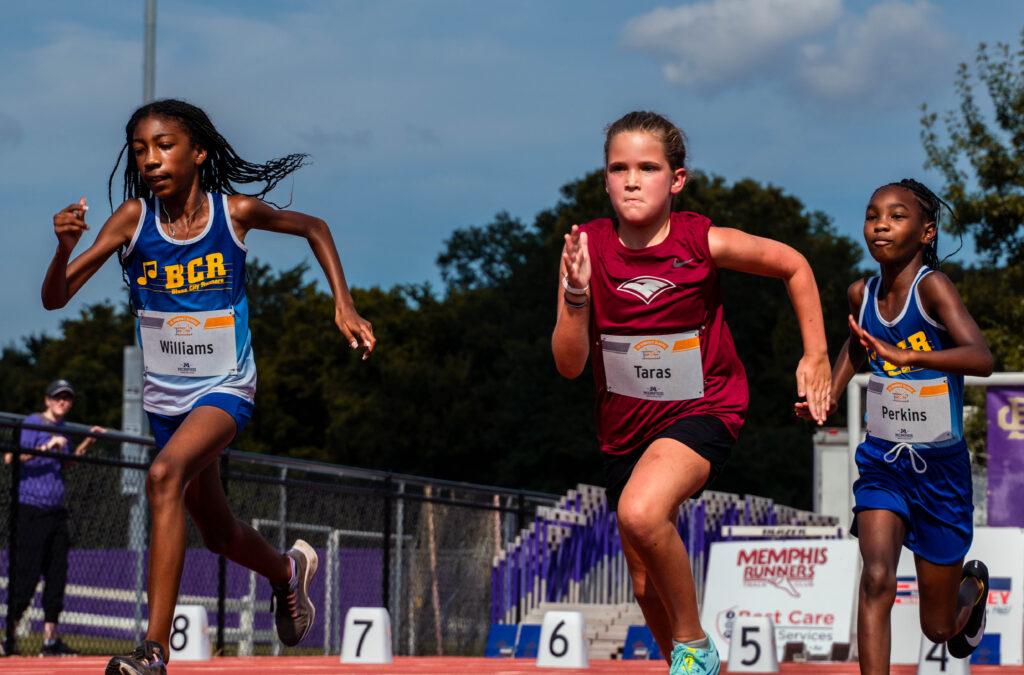
Middle school track and field is a spring sport for kids ages 11 to 14 that includes sprints, distance, hurdles, jumps, throws and relays. The season typically runs 8 to 12 weeks tied to the academic calendar, and most programs are no-cut, meaning every kid who signs up gets a spot. The focus is on skill development, trying different events and building a solid aerobic base.
This stage matters more than most parents realize. Middle school track is the bridge between elementary athletics and high school competition, giving kids the chance to find out what they’re made of before the stakes get higher.
At Memphis Youth Athletics, our Middle School Track & Field program welcomes beginners and experienced athletes alike. Whether your kid has never worn a pair of running shoes or has been racing since first grade, there’s a lane for them. Everyone is welcome.
When Is Middle School Track Season?
Middle school track is a spring sport. Sign-ups usually happen in late winter or early spring, school practices start shortly after and meets fill the calendar from March through May. Exact dates vary by school, so your coach or athletic director will have the final word.
If your kid ran cross country in the fall, track picks up a few months after that season wraps. The endurance they built carries right over, which is a big reason so many middle schoolers do both.
How the Middle School Track Season Works
The middle school track season runs on a predictable rhythm. Expect 2 to 4 practices per week, lasting about 60 to 90 minutes after school, followed by meets that can be anything from a quick dual meet to an all-day invitational.
Here’s what a typical practice looks like:
- Warm-up: Dynamic stretching, drills and strides
- Event work: Technique for sprints, jumps, throws or distance
- Workout: The main training block (intervals, repeats or technical reps)
- Cool-down: Easy jog, static stretching and hydration
Middle school track meets come in two main flavors. Dual meets are quick, usually against one or two other schools. Invitationals and championships close out the season with bigger fields and more events.
Most student-athletes compete in 2 to 4 events per meet based on coach assignment. Your kid might run a 100m dash, jump long and anchor a relay all in the same afternoon. Coaches rotate assignments early in the season to help kids find their best events.
How MYA’s Spring Track Series Works
Our spring developmental track and field series gives middle schoolers a full season of meets. Here’s how it’s set up:
- Open to students in grades 6 to 8 from public, private and homeschool programs
- Students without a school team can compete unattached, with the team closest to their public school zone or with a recognized homeschool cooperative
- Four to five meets from March through May
- Each meet runs no longer than 4.5 hours, generally from 1:00 to 5:30 PM
- A championship meet closes the season, and athletes need at least one regular season meet to qualify
Field events include shot put, long jump and high jump. Volunteers help at our meets by checking bib numbers, measuring jumps and throws and lending a hand at the finish line.
Benefits of Middle School Track for Young Athletes
Track hits a sweet spot in a kid’s development. The season lines up with a key growth window, and the sport itself builds aerobic fitness, speed and full-body coordination all at once. There’s no bench time, no sitting out and no reason for anyone to feel left behind. Every kid gets to run, jump or throw.
Here’s what middle schoolers gain from a season on the track:
- Fitness that lasts. Running, jumping and throwing build the aerobic and neuromuscular foundation that supports every other sport.
- Confidence from day one. The no-cut, high-participation structure means first-time athletes get real reps and real progress, fast.
- Measurable goals. PRs (personal records) give kids a built-in way to track growth. A tenth of a second faster is a win they can see.
- Transferable athleticism. Speed, power and coordination from track show up in football, soccer, basketball, lacrosse and beyond.
- Mental and physical wellness. Regular training supports focus, sleep quality and mood during a demanding school year.
- A clear pathway. Middle school track sets kids up for high school programs, and distance runners who want more can move into high school cross country and Team 901, our postseason cross country program.
Kids who find track in middle school tend to stick with movement for years, whether or not they end up chasing a varsity letter. That’s the point. We’re creating healthy habits with every run, jump and throw.
Is Your Middle Schooler Ready for Track?
Most middle school track programs are no-cut and welcome kids at every experience level, so readiness is less about talent and more about mindset. Does your kid enjoy moving? Can they follow coach instructions? Are they open to trying new events, even the awkward ones? If yes, they’re ready.
Signs your middle schooler is ready for track:
- Enjoys running, jumping or being active in general
- Can follow directions and work in a group setting
- Open to trying multiple events before picking a favorite
- Willing to show up consistently for practices
- Interested in setting personal goals, even small ones
A few extra considerations:
- Growth spurts: Kids coming off a big growth spurt should start conservatively. Watch for aches in knees, shins or hips, and let a coach know if something feels off.
- No running background needed: Plenty of middle school track athletes have never run competitively before. The sport is built for first-timers.
- Already in another spring sport? Soccer, lacrosse and baseball all overlap with track. Talk to both coaches before doubling up, and keep an honest eye on total weekly load.
MYA welcomes beginners and experienced athletes alike. If your kid is on the fence, sign up for one season and see how it feels. That’s usually all it takes.
Frequently Asked Questions
When does middle school track season start?
Middle school track is a spring sport. Sign-ups usually open in late winter, practices start shortly after and meets run from March through May. MYA’s spring series holds four to five meets in that window, followed by a championship meet.
How long is a middle school track meet?
Small dual meets can wrap up in a couple of hours, while invitationals and championships can take most of the day. MYA meets run no longer than 4.5 hours, generally from 1:00 to 5:30 PM. Bring snacks, water, sunscreen and something to sit on.
What events are in middle school track and field?
Middle school track usually includes a mix of sprints (100m, 200m, 400m), middle distance (800m, 1600m), hurdles, relays, jumps and throws. Most kids try several events early in the season before settling into their best fits. Coaches help match athletes to the events where they’ll have the most fun and the most success.
Can my child do both track and cross country?
Yes, and plenty of kids do. Cross country runs in the fall and track runs in the spring, so the seasons don’t overlap. The endurance from cross country carries into the distance events, and the speed work from track pays off when fall comes back around.
Does my child need to be fast to join?
No. Most middle school programs are no-cut, and MYA welcomes beginners and experienced athletes alike. Track has events for every body type and skill set, and the goal in a first season is trying new events and beating your own personal records.
What is needed for middle school track?
The basics are a pair of running shoes, athletic clothes (shorts and a t-shirt work fine) and a water bottle. That’s it to start. As your kid gets more serious about a specific event, spikes may become useful for sprinters, jumpers and hurdlers, but they’re not needed at the middle school level. Most programs provide the team uniform.
Ready to Get Started?
Middle school track season is a great time to build fitness, try new events and set the stage for whatever your kid wants to do next. Memphis Youth Athletics supports families across Memphis and the surrounding areas with programs that welcome every kid, every background and every ability level.
If you want to learn more about our spring series or ask about fee waivers, register today or get in touch. We’re all about fun, fitness and finish lines, and we’d love to see your kid on the track this spring.