
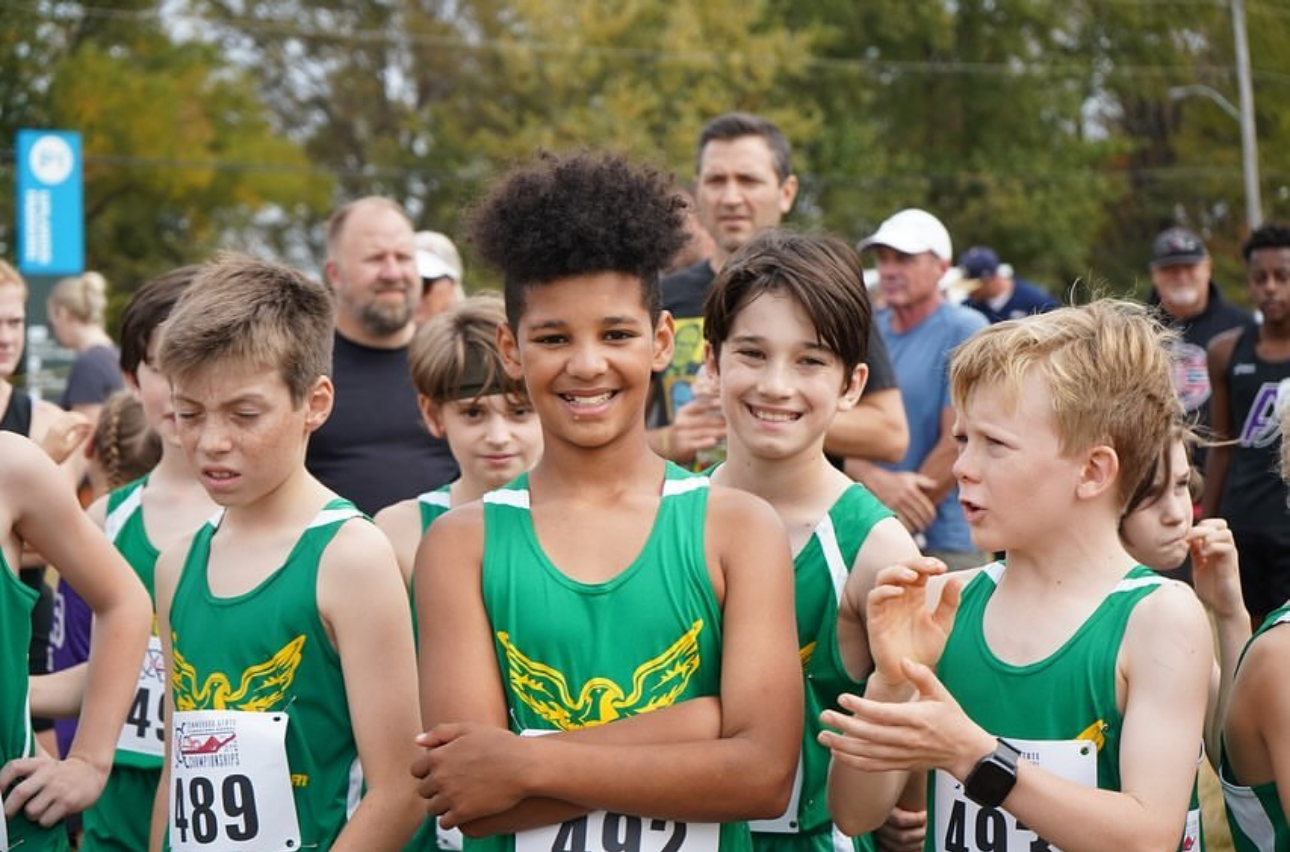
Your kid comes home from school and announces they’re running cross country this fall. You nod, smile, and immediately wonder what you just agreed to.
Middle school cross country really comes down to a handful of basics. When the season runs, what happens on meet day, how scoring works, and what your runner actually needs to show up prepared. Here’s the plain-language version from Memphis Youth Athletics, where we spend every fall on the course with student-athletes and their families.

What Is Middle School Cross Country?
Middle school cross country is a fall team sport where student-athletes run 1.5 to 2 miles over grass, dirt, and trail courses, with each runner’s finishing place added into a team score. Most programs welcome 6th through 8th graders of every athletic background.
Cross country doesn’t ask kids to be tall, fast, or experienced. It asks them to show up and keep moving. That is not a marketing line, it is how the sport has always worked.
When Does Middle School Cross Country Season Start?
Cross country is a fall sport. Practices usually begin in August, often before the first day of school, and meets run from late August or early September through the end of October. Championship and district meets close things out in late October or early November, which makes it one of the shortest seasons on the school calendar at roughly ten to twelve weeks start to finish.
Exact dates shift year to year and vary between school districts and club programs. Meet dates for our fall cross country series are posted on the yearly calendar well ahead of the season, so you can get them on the family schedule early.
After the season ends, some runners continue with a postseason program like Team 901, and many head into spring track.
How Far Do Middle Schoolers Run?
Distances shift a bit depending on the meet and the age group:
- Elementary runners: usually shorter, often around a mile
- Middle school runners: commonly 1.5 to 2 miles, roughly 2K to 3K
- Older middle schoolers and high schoolers: sometimes step up to 5K, which is 3.1 miles
Meet directors publish exact distances ahead of time, so you’ll always know what your runner is facing before meet day.
Why Is Every Course Different?
A track is a track. A cross country course is whatever the venue gives you that day.
Terrain changes from meet to meet: rolling hills at one, a flat park loop at the next, wet grass and mud after a Thursday storm. Kids learn to read a course, adjust their effort on climbs, and stay on pace when the footing gets sloppy. Times aren’t perfectly comparable meet to meet, and that’s part of the sport’s charm.
How the Season Works: Practices, Meets, and Scoring
Middle school cross country runs on a weekly rhythm. Three to five practices that mix easy running, one or two harder workouts, and rest, followed by a meet. At meets, each team’s top five finishers have their places added together, and the lowest total wins.
What Does a Typical Practice Week Look Like?
Most middle school teams build a week that looks something like this:
- Monday: easy run at conversational pace, short and relaxed
- Tuesday: intervals or tempo work, repeats with recovery jogs between
- Wednesday: easy run plus form drills, strides, and core work
- Thursday: hills or a steady run, short climbs with the focus on effort rather than pace
- Friday: light shakeout, course talk, and an early night before a meet
- Saturday: meet day, warm-up through cool-down
- Sunday: full day off
Mileage should climb slowly across the season rather than jumping in big chunks. Young bones and tendons adapt at their own pace, and gradual progression is the single best tool a team has for preventing overuse injuries.
Memphis Youth Athletics serves as the meet director and facilitator for the fall series, which means we handle courses, timing, officials, and results while school and club teams handle their own practices. We don’t hold practices or directly train athletes, but we recommend teams meet at least two to three times a week so kids are prepared to complete their course comfortably. Early in the season the goal should be building positive fitness habits, with performance taking a back seat to participation.
What Happens on Meet Day, Start to Finish?
The first meet feels chaotic. The second one feels familiar. Here’s the flow:
- Arrival: teams claim a tent spot, check in, and pin on bib numbers
- Course walk: volunteer coaches walk runners through turns, hills, and the finish chute
- Warm-up: an easy jog, dynamic drills, and strides about 20 to 30 minutes before the start
- The course: a mass start with everyone going at once, then a fast, crowded first 400 meters that settles out
- Cool-down: easy jogging, water, and a snack
- Awards: individual medals and team recognition, usually shortly after the last finisher
Results from our meets are published on MileSplit, so you can look up splits and place finishes after you get home, and photos land on our SmugMug galleries.
How Does Team Scoring Work?
Team scoring is simple arithmetic once you see it once:
- Every runner earns points equal to their finishing place, so 1st place is 1 point and 12th place is 12 points
- Each team’s top five finishers have their points added together
- The lowest total is the best score
- Runners six and seven don’t score, but they push other teams’ scorers back, which is why they’re called displacers
If your team’s scorers finish 2nd, 5th, 8th, 10th, and 14th, the team total is 39. A perfect team score is 15.
Here’s the piece that surprises most parents. Your kid runs their own effort, alone in their own head for most of the course, yet every place they earn feeds into the team total. The seventh runner on a squad can change the outcome of a meet by passing one person in the last 200 meters. Nobody rides the bench.
What Do Parents Do on Meet Day?
You have a job too, and it’s a fun one.
- Scout two or three spots on the course where you can see your runner more than once
- Cheer effort, not place. “Great arms!” and “Stay relaxed!” land better than “Catch her!”
- Bring water, a snack, and a towel. Kids get cold fast once they stop moving
- Skip the post-meet critique. Ask how it felt before you ask about the time
- Pack a chair and bug spray. Meets run long and parks are parks
The best thing you can do after a rough meet is hand your kid a snack and change the subject.
Benefits of Cross Country for Middle School Athletes
Cross country gives middle schoolers something rare in youth sports, which is a place where showing up earns you a spot. No bench decisions, no roster politics. Every runner who registers gets to line up, run the course, and see a number next to their name. Maybe your school has a team, maybe it doesn’t. Maybe you’re homeschooled, or you just love to run. Either way, everyone is welcome.
How Does Cross Country Fitness Carry Into Other Sports?
Running builds the aerobic base underneath basketball, soccer, volleyball, football, and lacrosse. Kids who run all fall come back to their other sports with better stamina and better recovery between efforts.
Regular running, jumping, and throwing can fight obesity, improve stamina and energy levels, and reduce symptoms of anxiety and depression. It also lowers the risk of diabetes, develops motor skills, and builds confidence and self-esteem. Those skills are the foundation for development in any sport or fitness activity.
Which Skills Outlast the Season?
A clock doesn’t care about politics or playing time. It gives honest feedback every week, and runners set personal records and chase them by seconds. Even a kid who finishes near the back can run their best course of the fall.
Distance running also teaches things that are hard to teach anywhere else:
- Discomfort tolerance: the middle mile is uncomfortable, and kids learn to keep going anyway
- Pacing: going out too fast is a lesson every runner learns exactly once
- Self-discipline: nobody can run your workout for you
- Resilience: rough meets happen, and the next one is only a week away
The team feel is real, too. Runners warm up together, suffer together on hill day, and stand at the finish chute screaming for the last teammate to come through.
How Does Cross Country Set Up Spring Track?
The aerobic base built in the fall shows up in March. Cross country runners typically come into track ready to handle the 800m, 1600m, and 3200m with fitness their competitors are still building.
Many student-athletes in our fall series roll straight into the spring developmental track and field program, and the two seasons complement each other nicely.
Cross Country vs. Track and Field: Which Fits Your Child?
Both sports teach running. They just teach it differently, in different seasons, on different surfaces.
- Season: cross country is a fall sport, track runs in the spring
- Surface: grass, dirt, trails, hills, and mud, versus a measured oval that’s usually rubberized
- Distance: one distance per meet, about 1.5 to 2 miles for middle school, versus everything from short sprints to 3200m
- Start format: a mass start with the whole field together, versus heats with assigned lanes and staggered starts
- Scoring: top five places added with the lowest total winning, versus points by place in each individual event
- Event options: distance running only, versus sprints, hurdles, relays, distance, jumps, and throws
- Conditions: weather and terrain change every course, while track stays consistent enough to compare times
Why Do Plenty of Kids Do Both?
The training cycles fit together on purpose. Fall builds endurance, spring sharpens speed, and a runner who does both arrives at each season with something already in the bank.
Track also gives kids room to experiment. A cross country runner might discover they’re a natural in the high jump or that they love the 400. Our spring developmental program exists so elementary and middle school students across Memphis can try running, jumping, and throwing without committing to one thing forever.
How Do You Choose If You’re Picking Just One?
Think about temperament more than talent:
- Choose cross country if your kid enjoys long walks and bike rides, likes being outdoors in the fall, prefers steady effort over short bursts, and wants a big team environment
- Choose track if your kid loves quick, explosive movement, gets bored running for 15 straight minutes, or wants to try several different events in one season
- Still on the fence? Sign up for both. Most kids don’t know what they like until they’ve done it
There’s no wrong answer here. Kids change their minds, and both sports welcome them back.
Is Your Child Ready for Cross Country?
Most middle schoolers are more ready than they think. If your kid can move for 20 minutes without stopping, they can start cross country. Everything else gets built during the season.
What Are the Signs Your Kid Is Ready?
- They can run or run-walk for 20 or more minutes without dread
- They ask questions about how to get faster
- They like the idea of being on a team more than the idea of individual glory
- They’re willing to be outside in heat, cold, and rain
- They’ve expressed even mild curiosity about running
Notice what’s missing from that list: prior experience, speed, and a specific body type. Beginners start with run/walk progressions and build from there.
Which Pre-Season Prep Pays Off?
If practice starts in August, three to four weeks of easy base running beforehand makes a real difference. Nothing complicated:
- Start with 10 to 15 minutes of easy running or run/walk, three days a week
- Add a few minutes to one run each week
- Break in new shoes before the first practice, not during it
- Get outside in the heat so the first hot practice isn’t a shock
- Rebuild a school-year sleep schedule a week or two early
Which Health Basics Matter Most?
- Physical exam: get the sports physical done before the first practice, and mention any history of asthma, anemia, or growth-related pain
- Hydration: water throughout the day, not just at practice, especially in Memphis late-summer heat
- Fueling: middle schoolers running regularly need real meals and snacks, including iron-rich foods like lean meat, beans, and leafy greens
- Sleep: kids this age need substantially more sleep than adults, and recovery happens overnight
Our guide to recovery for young athletes goes further on the hours and days after a hard effort, which is where most of the adaptation actually happens.
Which Warning Signs Are Worth Flagging?
Some soreness is normal. These are not:
- Sharp or persistent shin, knee, hip, or foot pain that doesn’t fade after a rest day
- Pain that changes how your kid walks or runs
- Exhaustion that lingers all day, every day
- Appetite loss, unexplained weight change, or missed periods in girls
- Dizziness, headaches, or nausea during easy runs
Bring these to the coach and your pediatrician early. Small problems handled in September stay small.
How Can You Support Your Runner at Home?
Your kid will come home hungry, sweaty, tired, and a little sore. All four are normal.
Feed them. Let them sleep. Skip the split-time analysis unless they bring it up first, and cheer for the effort you saw rather than the place they earned. The mentality to keep moving gets built through encouragement, not pressure.
Cross country asks very little to begin and gives back quite a lot. A pair of shoes, a few weeks of easy running, and a team to show up for.
Memphis Youth Athletics is a nonprofit that manages, supports, and funds area youth track and field, cross country, and running programs, under the direction of Executive Director Nick Dwyer and built on the founding work of Marty Sonnenfeldt. If your school doesn’t have a team and you’d like to start one, get in touch and we’d love to help.
Fall cross country and spring track run across the Memphis area all year. Take a look at our middle school cross country program and help us keep Memphis running. It all comes back to fun, fitness and finish lines, creating healthy habits with every run, jump, and throw.
Frequently Asked Questions About Middle School Cross Country
When does middle school cross country season start?
Practices usually begin in August, often before the first day of school, and meets run from late August or early September through the end of October. Championship and district meets close the season in late October or early November. That makes cross country one of the shortest seasons on the school calendar at roughly ten to twelve weeks. Exact dates vary between districts and club programs, so check the calendar for the schedule where your runner will compete.
How far do middle schoolers run in a cross country meet?
Middle school cross country courses usually cover 1.5 to 2 miles, which is roughly 2K to 3K, and that distance holds for most weekend meets on the fall schedule. Some meets run older middle schoolers at 5K, while elementary divisions often run a mile or less so younger kids can finish strong. Distances are announced in advance for every meet, so your runner will always know the course length before meet day. Terrain and hills affect finishing times more than the distance itself, which is why a hilly two-mile course can feel harder than a flat 5K.
How many days a week is cross country practice?
Most middle school teams practice three to five days a week, mixing easy runs, one or two harder workout days, drills, and at least one full rest day. Memphis Youth Athletics doesn’t hold practices or directly train athletes, but we recommend teams meet at least two to three times a week so kids are prepared to complete their course comfortably. Consistency matters more than volume at this age, and a runner who shows up steadily for eight weeks will be better prepared than one who trains hard for two and disappears.
Does my child need spikes for cross country?
No. Spikes are optional, and plenty of middle schoolers run their entire season in regular training shoes without any disadvantage on meet day. Racing flats or spikes add traction on wet grass and can feel lighter underfoot, but they aren’t a requirement for a first-year runner. If your runner does try spikes, break them in during a few strides at practice before a meet, since new shoes and unfamiliar pressure points are a poor combination on an important weekend. A well-fitted training shoe from a store that watches your kid run will serve almost every middle schooler just fine.
How do I know if my child is improving?
Look at three things: finishing times on similar courses, how they feel in the last half mile, and their willingness to keep showing up week after week. Course conditions vary so much that comparing times across different meets can be misleading, so pay attention to effort and finishing strength too. Improvement also looks like running an entire course without walking, holding pace on a hill that used to break them, or passing runners late instead of fading. Results from our meets are published on MileSplit if you want to track progress across the season.
Can a beginner or a non-runner join cross country?
Absolutely. Cross country is one of the most welcoming sports in middle school athletics, and no one is turned away for lack of experience or a particular body type. Beginners typically start with run/walk progressions, build to continuous running over a few weeks, and line up alongside everyone else once meets begin. Home-schooled students, or students whose schools don’t have a team, can often compete unattached or with the team closest to their school zone.