
This guide covers what youth sports camps offer, how they run day to day, what they typically cost, and how to choose the right fit for your child. If you want a program that keeps kids active, social, and excited about running, jumping, and throwing, the sections below walk you through every decision point. At Memphis Youth Athletics, we’ve spent years helping local families find programs that match their kids’ interests and athletic aspirations.
What Are Youth Sports Camps?
Youth sports camps are structured seasonal programs that teach athletic skills, teamwork, and healthy habits to kids through hands-on coaching and group activities. Most camps welcome student-athletes from elementary through high school, with sessions focused on areas like track & field, cross country, or general athletics. Families can choose single-day clinics, week-long day camps, or multi-week summer programs.
These programs are built to meet kids wherever they are. Some focus on basic motor skills like running form, jumping technique, and throwing mechanics. Others build on those fundamentals with conditioning, strategy, and meet preparation. Whether your child is brand new to sports or already racing on a school team, there’s a camp format built for them.
And everyone is welcome. You don’t need prior experience, fancy gear, or a competitive background to join, which makes camps an easy first step for families who are still figuring out what their kids enjoy most.
How Youth Sports Camps Work
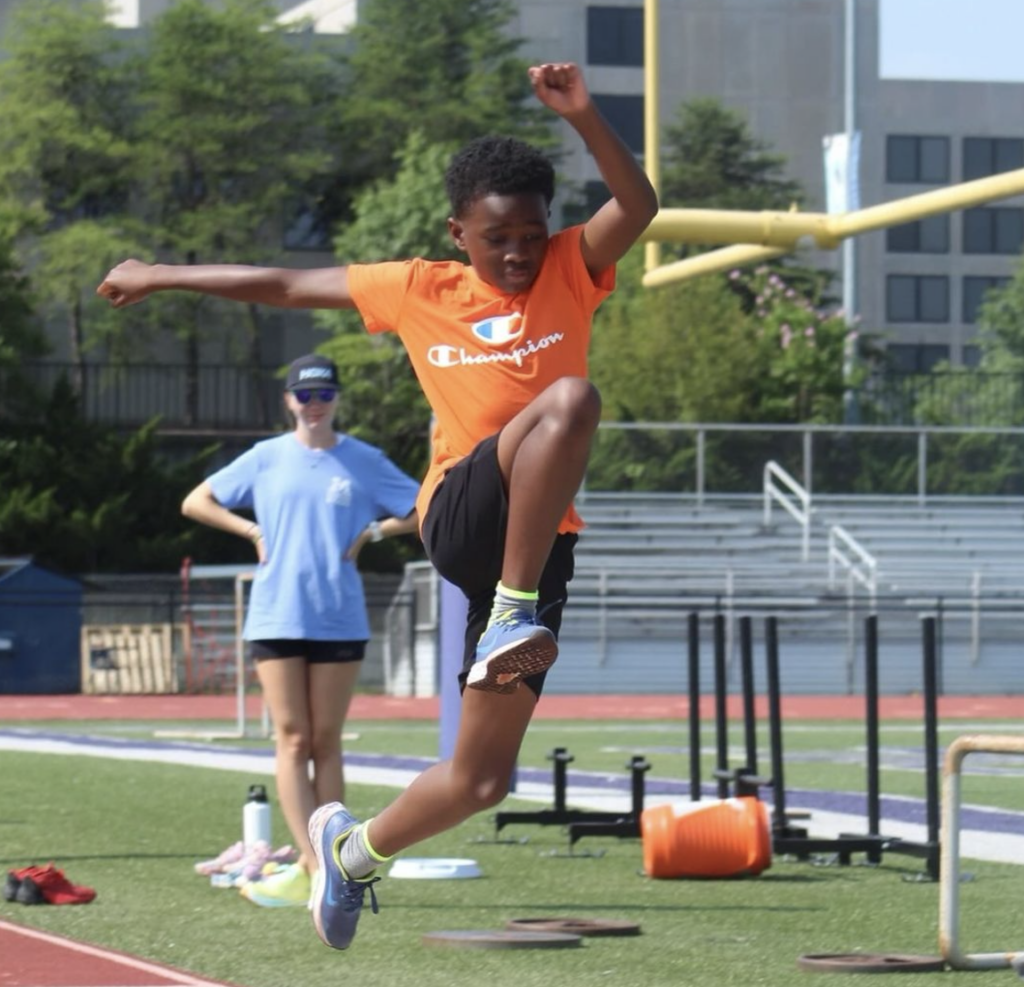
A typical camp day follows a predictable rhythm that keeps kids moving and engaged. Sessions usually open with a dynamic warm-up, move into skill drills, add conditioning or game-based learning, and close with a cool-down. Trained volunteer coaches group kids by age and ability so every athlete gets coaching that fits their level, with smaller groups giving kids more individual attention.
Here’s what a standard camp day often looks like:
- Warm-up and stretching (10 to 15 minutes) to get muscles ready
- Skill drills focused on running, jumping, or throwing fundamentals
- Conditioning to build endurance and coordination
- Games or relays that apply skills in a fun setting
- Cool-down and team huddle to wrap up the day
Camps run on a few different schedules. Summer day camps usually last one or two weeks. Seasonal programs may run several weeks during spring or fall. Skill progression moves from basic motor skills to course-ready conditioning, so kids build confidence as they go. Experienced volunteer coaches lead practices with the goal of helping every student-athlete push beyond where they thought they could go, and many of them have years of training and youth coaching experience behind them.
Benefits of Youth Sports Camps for Kids
Youth sports camps deliver benefits that stretch far beyond the finish line. Kids build physical fitness, but they also gain confidence, friendships, and the mentality to keep moving long after camp ends.
Your child can expect to gain:
What physical and social skills do kids build?
- Stronger fitness and coordination. Regular running, jumping, and throwing builds endurance, balance, and motor control, the foundation for any sport.
- Teamwork and discipline. Working with peers and following coach instructions teaches kids how to commit, listen, and support teammates.
- Healthy social connections. Camps bring together kids from different schools and neighborhoods, building friendships that often last well past the program.
How do camps support confidence and lasting habits?
- Confidence and self-esteem. Finishing a course or mastering a new drill helps kids find out what they’re made of.
- Active summers. Camps keep kids off screens and outside when routines often slip.
- New sports exposure. Some kids discover distance running, others the long jump or shot put.
Kids who stay active early often carry those habits forward into adulthood. According to the Sports & Fitness Industry Association, kids from under-resourced communities face higher rates of physical inactivity than peers from wealthier households, making accessible camps a real difference-maker for families.
Comparing Camp Types: Track, Cross Country & Multi-Sport
Not every camp is built the same. Choosing between single-sport and multi-sport formats depends on your child’s interests, age, and athletic aspirations. Here’s a quick side-by-side to help you decide:
| Camp Type | Focus Areas | Best For |
|---|---|---|
| Track & Field Camp | Sprints, hurdles, long jump, high jump, shot put, discus | Kids who like variety and want to try different events |
| Cross Country Camp | Distance running, pacing, endurance, course strategy | Kids who enjoy longer runs and want to go the distance |
| Multi-Sport Camp | Mix of sports, general athleticism, basic motor skills | Younger kids or those still figuring out what they love |
| Team-Based Programs | Group training, meet prep, team identity | Kids who thrive with peers and friendly meet experiences |
| Individual Skill Camps | One-on-one coaching, technique refinement | Older student-athletes ready to sharpen specific skills |
Track & field camps work well for kids who want to sample several events in one program. Cross country camps suit runners who love the rhythm of distance and the challenge of pacing themselves over a course. Multi-sport camps are ideal for younger kids whose interests are still forming. The key is matching the format to your child, not the other way around.
What Youth Sports Camps Cost
Youth sports camp costs vary based on program length, equipment needs, and coaching depth. Day camps typically run a few hundred dollars, while multi-week summer programs cost more because they include more sessions, more coaching hours, and sometimes meet entries. Nonprofit programs like Memphis Youth Athletics often offer fee waivers so cost never blocks a kid from participating.
Several factors shape what you’ll pay:
- Duration. A one-day clinic costs less than a four-week program.
- Equipment. Camps that supply uniforms, spikes, or specialty gear typically charge more.
- Coaching ratios. Smaller athlete-to-coach ratios usually mean higher fees.
- Meet fees. Programs that include meet registration bundle that into the total cost.
What’s usually included in the fee:
- Coaching and instruction
- Practice facility access
- A camp shirt or basic gear
- Meet entries (for seasonal programs)
- Insurance and safety coverage
Look for sibling discounts, early-bird registration savings, and fee waivers if you need them. Memphis Youth Athletics offers fee waivers for families in under-resourced communities, because we believe every kid deserves a shot at running, jumping, and throwing regardless of what a family can spend.
Is a Youth Sports Camp Right for Your Child?
A youth sports camp is a great fit if your child enjoys being active, wants structure during the summer, or is curious about trying a new sport. Beginner-friendly camps welcome kids with zero prior experience, so there’s no pressure to arrive with skills already in place. Camps also work well for kids who want to sharpen what they already know.
Here are signs a camp could be a strong match:
- Your child has energy to burn and loves being outdoors
- They want to make new friends outside school
- They’ve shown interest in running, jumping, or throwing
- You want to build healthy habits and a consistent routine
- They’re looking for a low-pressure way to try sports
Camps serve both recreational athletes who just want fun and fitness, and more focused student-athletes preparing for school competition. The best camps let performance issues take a back seat to participation, especially for younger kids. If you’re not sure whether your child is ready, start with a shorter program and see how they respond before committing to a longer one.
Frequently Asked Questions
What age can kids start youth sports camps?
Most youth sports camps welcome kids starting in elementary school, often around age 5 or 6, with programs running through high school. Younger kids usually focus on basic motor skills and fun, while older student-athletes work on technique and conditioning. Always check the specific age range for each program before signing up.
How long do youth sports camps last?
Camp length varies widely. Single-day clinics last a few hours, while typical summer day camps run one to two weeks. Seasonal programs like spring track or fall cross country may run several weeks, with practices a few times per week and weekend meets where kids race over a course. Pick a length that matches your family’s schedule and your child’s stamina.
What should my child bring to camp?
Most camps ask kids to bring athletic clothes, running shoes, a water bottle, sunscreen, and a healthy snack. Some programs provide a camp shirt on the first day. If your child is doing field events or throwing, the camp will usually provide the equipment. Check the program’s welcome packet for the exact list.
Do camps run during summer only?
No. While summer is the busiest season for day camps, many programs run year-round. Spring brings track & field programs, fall is prime time for cross country, and some camps offer winter conditioning sessions. Memphis Youth Athletics runs programs across multiple seasons to keep Memphis running all year.
Are camps available for beginners with no experience?
Absolutely. Most youth sports camps are built for beginners, and volunteer coaches expect kids to arrive with varying skill levels. Beginner-friendly camps focus on fundamentals, fun, and confidence-building rather than competition. Everyone is welcome, whether your child is a first-timer or a returning runner.
How do I register my child for a camp?
Registration usually happens online through the camp’s website. You’ll fill out basic info, sign waivers, and pay the fee or apply for a fee waiver. Spots can fill fast, especially for summer programs, so register today once registration opens. If you have questions, reach out to the program directly before signing up. We’d love to help you out!
If you’re looking for youth sports camps that focus on fun, fitness and finish lines, Memphis Youth Athletics runs programs for kids of every level. Our volunteer coaches, led by Executive Director Nick Dwyer and built on a mission started by founder Marty Sonnenfeldt, help kids build healthy habits with every run, jump, and throw. No matter where your child is starting from or how big their athletic aspirations grow, you can register today and give your child a shot at finding out what they’re made of.